
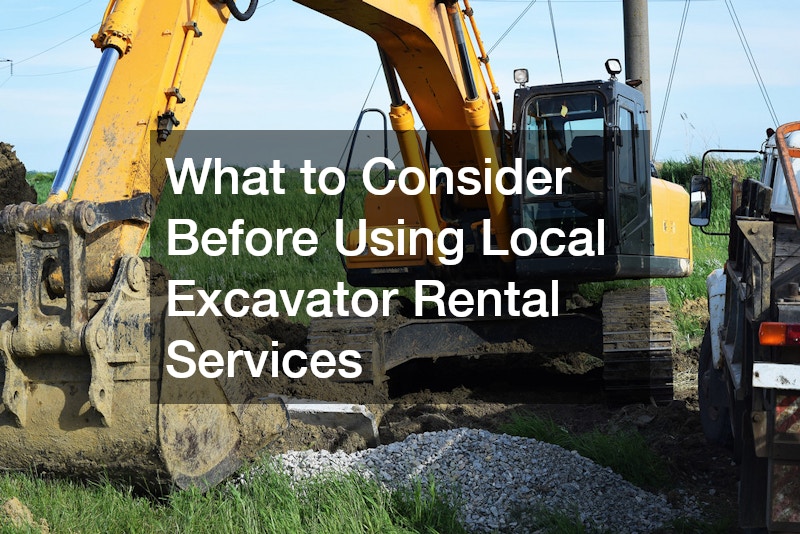
Earthmoving projects form the foundational phase of almost any construction, landscaping, or utility installation project. Whether you are clearing land for a commercial development, digging a residential swimming pool, laying drainage piping, or grading a foundation, having access to heavy excavation machinery is essential. Purchasing heavy equipment outright requires massive capital expenditure, ongoing storage space, and routine maintenance overhead that rarely makes sense for single projects or temporary jobs. Partnering with professional local excavator rental services offers a flexible, cost-effective way to secure modern machinery tailored to your exact site requirements, allowing you to complete digging tasks safely, efficiently, and within budget.
Choosing the Right Machine Size and Capabilities
Excavators come in a wide range of weight classes and configurations, making machine selection one of the most critical decisions during job planning. Operating a machine that is too small slows down progress and risks mechanical strain, while choosing an oversized machine can lead to turf damage, spatial maneuvering issues, and unnecessary hire expenses.
Equipment providers typically categorize earthmoving fleet options into three primary size classes:
-
Compact or Mini Excavators: Weighing under six metric tons, these units excel in tight residential spaces, backyard landscaping, utility trenching, and indoor demolition work where maneuvering space is extremely limited.
-
Mid-Size Excavators: Ranging from six to forty metric tons, mid-size units strike a balance between power and flexibility, making them popular for general commercial building, pipe laying, and site prep.
-
Large Excavators: Exceeding forty metric tons, these heavy-duty machines deliver maximum digging depth and bucket capacity for large-scale civil engineering, highway infrastructure, and bulk earthmoving operations.
Evaluating site dimensions, soil hardness, required digging depth, and bucket capacity with your equipment supplier ensures you select a machine capable of handling the workload efficiently.
Evaluating Bare Rental vs. Operated Machinery Options
When arranging heavy machinery hire, contractors and property owners must choose between a bare equipment arrangement or an operated machinery service. A bare hire agreement provides only the excavator itself, leaving fuel, daily maintenance checks, transportation logistics, and operating personnel entirely to the hiring client. This route offers maximum cost savings for established contractors who employ certified, full-time operators.
Alternatively, hiring an operated machine delivers the equipment alongside a licensed, highly experienced machine operator and technical support crew. While operated hire carries a higher hourly rate, it significantly reduces liability, eliminates operator training delays, and ensures precise, efficient excavation work. For complex site layouts or tight deadlines, utilizing professional local excavator rental services with an experienced operator minimizes job site risks and prevents costly structural mistakes.
Assessing Site Accessibility and Transport Logistics
Transporting multi-ton excavators to a job site involves detailed logistics and careful planning. Heavy machinery must be transported via lowboy trailers, requiring wide turn radiuses, sufficient overhead clearance for trees and power lines, and firm ground for loading and unloading. Before placing an order, assess your property’s access points, narrow driveways, soft soil areas, and low-hanging obstacles that could impede delivery trucks.
Furthermore, always confirm whether the equipment supplier includes delivery and pickup fees in their initial quote. Unexpected drop-off surcharges can significantly impact your project budget. Choosing an established local supplier ensures prompt delivery times, lower transport fees, and familiarity with regional roadway weight limits and transit permits.
Prioritizing Utility Clearance and Site Safety
Excavation work carries inherent safety risks, particularly regarding underground utility lines, soil collapse, and machine stability on slopes. Before turning a single shovel of dirt, property owners and contractors are legally required to contact regional utility location services (such as dialing 811) to mark underground electrical, gas, water, and telecommunications lines. Striking a buried power line or gas main causes severe safety hazards, expensive utility outages, and heavy legal fines.
Additionally, operators must conduct daily pre-operation inspections, checking hydraulic lines, track tension, engine fluids, and safety interlocks. Working alongside safety-conscious local excavator rental services guarantees that you receive thoroughly inspected, well-maintained machinery equipped with current safety features like Roll-Over Protective Structures (ROPS) and falling object protection.
Reviewing Rental Agreements, Insurance, and Cost Structures
Before signing an equipment contract, carefully review the pricing structure, deposit requirements, and insurance obligations. Equipment pricing typically varies based on daily, weekly, or monthly usage rates. If your project spans several weeks, securing a monthly rate offers substantial savings compared to daily charges.
Verify who holds financial responsibility for routine maintenance, unexpected mechanical breakdowns, and equipment wear-and-tear. Most rental centers require renters to carry contractor’s equipment insurance or purchase a temporary loss damage waiver (LDW) to cover potential machine damage or theft while on-site. Clarifying these terms upfront prevents unexpected out-of-pocket expenses.
Renting heavy excavation equipment empowers homebuilders, contractors, and land managers to complete demanding earthmoving projects with professional precision. By matching machine sizes to job specifications, verifying utility clearances, evaluating operator needs, and securing transparent rental terms, you protect both your budget and your job site. Contact a trusted local equipment specialist today to evaluate your excavation requirements, request detailed machine spec sheets, and schedule reliable delivery for your upcoming building project.