
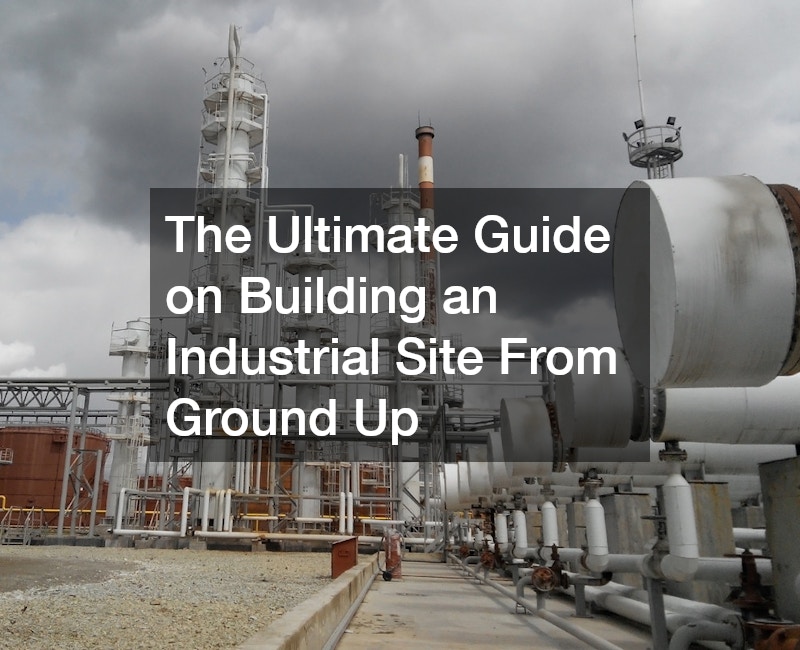
Building a modern industrial facility is one of the most complex, capital-intensive undertakings a business can pursue. Unlike standard commercial office spaces or retail builds, an industrial site is a high-stakes ecosystem where structural engineering directly impacts logistics, workflow, and long-term profitability. A single miscalculation in your slab floor’s load capacity or an overlooked zoning ordinance can cause catastrophic delays, resulting in hundreds of thousands of dollars in blown budgets before production even begins. Deciding to take on a project of this magnitude requires a firm commitment to rigorous planning and a deep understanding of industrial infrastructure from day one.
However, when executed with precision, building a custom industrial facility from scratch offers a massive competitive edge. Legacy retrofits often force you to compromise your assembly line layouts, suffer through inadequate ceiling clearances, or battle outdated electrical grids. By constructing your facility from the ground up, you can tailor every square foot to your exact operational requirements, optimize your supply chain routing, and integrate future-proof automation technologies. This comprehensive guide breaks down the massive undertaking into five distinct, chronological phases, providing a blueprint to take your industrial project successfully from raw dirt to a fully operational, revenue-generating facility.
Phase 1: Site Selection, Due Diligence, and Legal Structuring
Navigating Logistics, Zoning, and Acreage Requirements
The success of an industrial facility is fundamentally tied to its physical coordinates. When evaluating potential parcels of land, look far beyond the initial price per acre. You must conduct a rigorous logistical analysis to ensure the site can support your daily operational volume. Consider the following geographic and infrastructure factors during your land search:
-
Proximity to transport corridors, calculating the exact drive times to major interstate interchanges, deepwater ports, or active rail spurs to minimize freight costs.
-
The capacity of the local utility grid ensures the municipal lines can deliver three-phase power, high-volume water supply, and high-speed fiber-optic data infrastructure without requiring cost-prohibitive grid upgrades.
-
Evaluating the local labor pool, analyzing commuting patterns, public transit access, and regional housing availability to guarantee your future workforce can reliably reach the site.
To safely navigate these overlapping variables, it is crucial to partner with a specialized real estate agent who focuses exclusively on the industrial market. This professional can uncover off-market parcels, interpret complex municipal master plans, and investigate whether a plot of land has past environmental contamination issues that could trigger lengthy regulatory cleanups.
Protecting Your Capital and Navigating Compliance
Before any heavy machinery rolls onto the property, you must establish an ironclad legal and financial framework. Industrial developments face intense scrutiny from local planning boards, environmental agencies, and municipal utility districts. To protect your core enterprise from the unique liabilities inherent in large-scale construction, work with your financial team to establish a dedicated special purpose entity to hold the property and manage the development capital.
Simultaneously, you must retain an experienced business attorney who can review municipal land-use covenants, handle structural easements, and spearhead the application process for local tax abatements or economic development incentives. Your legal counsel will also be responsible for drafting and auditing the master contracts for your general contractor and architectural teams, ensuring that project milestones, delay penalties, and lien waivers are clearly defined and legally enforceable. Taking these steps early prevents zoning disputes or contractual ambiguities from freezing your project midway through development.
Phase 2: Earthwork, Foundation, and Structural Engineering
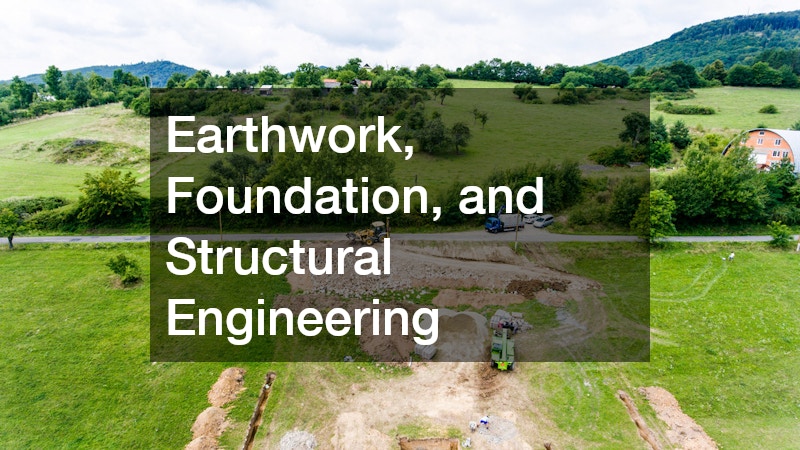
Pre-Construction Soil Testing and Mass Grading
Industrial facilities place extreme, dynamic demands on the earth beneath them. Heavy manufacturing machinery creates constant vibration, high-bay racking concentrates immense weight onto small footprints, and loaded forklifts exert continuous stress on the flooring. Therefore, the pre-construction phase must begin with comprehensive geotechnical boring tests to analyze soil composition, moisture content, and load-bearing capacity.
Once the soil profile is understood, you must hire a heavy-duty excavation service to prepare the site. This phase involves stripping topsoil, executing massive cut-and-fill operations to establish a perfectly level subgrade, and implementing rigorous soil stabilization techniques, such as lime or cement treating, to prevent future shifting. Skipping or rushing this step almost guarantees that your concrete slab will crack, tilt, or fail prematurely, which can bring your entire production line to a grinding halt years down the road.
Sourcing Heavy-Duty Materials for Industrial Durability
With the earth properly stabilized, the focus shifts to sourcing the physical materials that will form the skeletal structure of your facility. Industrial structures require specialized grades of concrete and structural steel designed to withstand both environmental elements and intense daily operational wear. Work closely with your engineering team to specify high-performance, low-shrinkage concrete mixes for the primary floor slabs, often utilizing fiber reinforcement or post-tensioned designs to minimize joints and eliminate curling.
To execute this effectively, you must establish direct relationships with regional building supplies vendors early in the design phase. Securing long-term material contracts allows you to:
-
Lock in bulk pricing for structural steel, rebar, and aggregate, shielding your project budget from sudden market inflation and global supply chain volatility.
-
Coordinate strict delivery schedules that match your pouring timeline, preventing on-site material congestion while ensuring your crews are never left waiting for critical components.
-
Verify that all arriving materials carry the precise certified testing documentation required by local building inspectors, avoiding costly project shutdowns due to compliance issues.
Phase 3: Building Envelope and Climate Engineering
Optimizing Thermal Efficiency and Roof Lifecycle
The building envelope—comprising the roof, exterior walls, and insulation—is your facility’s first line of defense against the elements. Because industrial buildings feature vast roof expanses, the design of this component has an overwhelming impact on your monthly utility bills and long-term asset value. For modern industrial sites, a high-reflectivity, multi-ply roofing system is typically the most cost-effective choice, helping to bounce solar radiation away from the building and lower cooling demands.
You must engage a certified industrial roofer early in the structural design process. A specialized professional will ensure the roof deck is engineered to support the weight of heavy commercial exhaust fans, solar arrays, or penthouse mechanical units. Furthermore, they can install single-ply thermoplastic polyolefin or modified bitumen systems that qualify for comprehensive, long-term warranties, protecting your interior inventory and machinery from catastrophic water damage.
Master Environmental Control and Air Quality Management
Managing the interior climate of an industrial site is vastly different from cooling an office building. You must accurately calculate your facility’s total internal heat load, which includes the heat generated by your manufacturing machinery, high-intensity lighting systems, charging stations, and worker density. Proper air distribution is also critical for employee health and safety, particularly if your processes involve welding, chemical blending, or dust generation.
To solve these complex thermodynamic challenges, coordinate a highly specialized commercial hvac installation that features automated energy recovery ventilators and dedicated makeup air units. These heavy-duty systems are designed to pull in fresh outside air, filter it thoroughly, and maintain positive building pressure. This pressure barrier keeps outdoor dust, insects, and unfiltered humidity from seeping into your clean production zones every time a loading dock door opens, preserving both your product quality and your mechanical equipment.
Phase 4: Interior Fit-Out and Site Infrastructure
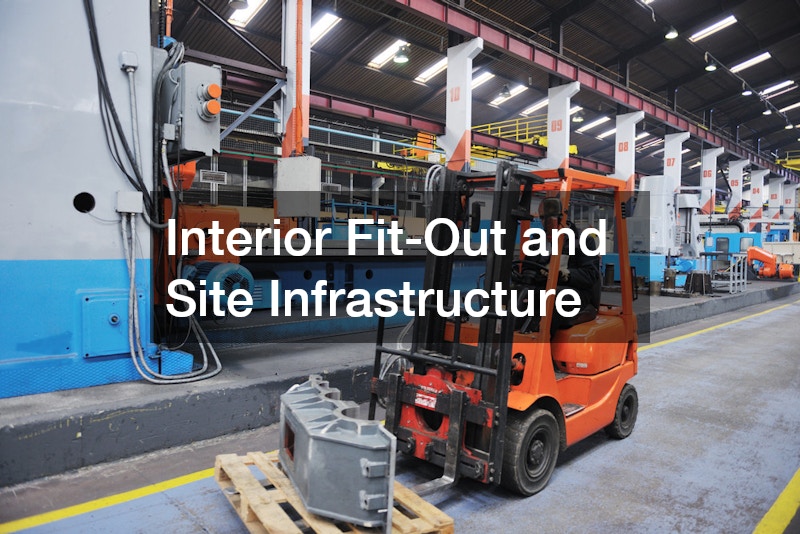
Designing Ergonomic, Energy-Efficient Interior Workspaces
While the warehouse or factory floor is the engine room of your industrial site, the supporting interior administrative zones, control rooms, and engineering offices require equal attention. A poorly designed interior space can lead to employee fatigue, high turnover, and reduced operational efficiency. When planning these zones, focus heavily on ergonomic layouts and strategic lighting design, which are proven to boost accuracy and morale.
Integrating natural daylighting into your administrative areas is an excellent strategy, but it requires careful management to prevent localized heat buildup and blinding glare on computer terminals or monitoring screens. Installing automated commercial window treatments is a highly effective way to mitigate this issue. By utilizing motorized, durable solar shades linked to sun sensors, your facility can automatically adjust to shifting light levels throughout the day, maintaining a comfortable, glare-free workspace while reducing the strain on your supplemental cooling systems.
Engineering Heavy-Traffic Exterior Circulation Zones
The exterior layout of your industrial site must be engineered with the precision of a small airport. You must design separate, dedicated traffic patterns for passenger vehicles, pedestrian workers, and heavy logistics trucks to maximize safety and efficiency. The loading dock area, trailer staging yards, and access roads face continuous, grinding wear from multi-ton vehicles twisting, braking, and accelerating.
To ensure your infrastructure does not fail under this abuse, hire experienced commercial paving contractors who specialize in deep-strength asphalt and reinforced concrete pavements. Your paving partners will design thick, stabilized aggregate bases beneath the pavement layer, specifically tailored to handle the high axle loads of fully loaded semi-trucks. They will also implement proper slope gradients and heavy-duty storm drainage catch basins to prevent water from pooling around your loading bays, ensuring smooth, uninterrupted logistics operations in all weather conditions.
Phase 5: Construction Oversight and Long-Term Handover
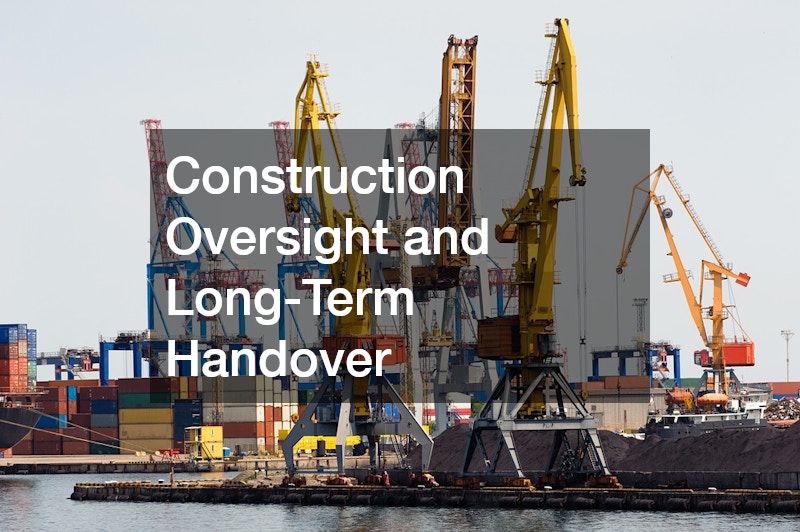
Leveraging Real-Time Tech to Protect Your Investment
As your industrial site progresses through the active building phases, maintaining absolute visibility over the physical work is critical. With dozens of specialized subcontractors working simultaneously, a lack of strict oversight can quickly lead to scheduling conflicts, skipped quality-control checks, and costly rework. To prevent these blind spots, modern industrial projects rely heavily on advanced field technology.
Implementing a comprehensive system for construction site monitoring is one of the smartest ways to de-risk your development. By utilizing automated job-site cameras, daily drone flyovers, and 3D laser scanning, your management team can continuously verify that the physical build aligns perfectly with your architectural blueprints. This real-time data stream allows you to:
-
Catch minor structural deviations or piping misalignments before they are permanently buried in concrete or behind drywall.
-
Provide remote stakeholders, financial backers, and inspectors with transparent, verifiable updates on project milestones without requiring constant site visits.
-
Maintain an immutable photographic record of the entire build process, which serves as invaluable documentation for future facility expansions or insurance assessments.
Setting Up the Facility for Day-One Operational Excellence
The final milestone of building from the ground up is the transition from a live construction zone to an active, operational business asset. This handover process must not be rushed. Long before the grand opening, your team needs to compile a comprehensive digital operational manual that outlines every structural component, electrical circuit, and mechanical asset in the facility.
To protect your massive capital investment, establish a rigorous building maintenance protocol on day one. This program should feature a computerized maintenance management system that automatically schedules routine inspections of your slab joints, dock levelers, emergency backup systems, and roof drainage pathways. Catching minor wear and tear early ensures your facility operates at peak efficiency, preserves your valuable equipment warranties, and prevents unexpected downtime from interrupting your core business operations.
Building an industrial facility from the ground up is a monumental journey that requires meticulous planning, substantial financial investment, and the synchronized efforts of diverse technical specialists. From the initial phases of analyzing soil profiles and securing proper legal frameworks to engineering the building envelope and pouring heavy-duty pavements, every decision you make establishes the baseline for your business’s future operational efficiency. While it demands significant patience, the long-term payoff of a tailored footprint far outweighs the quick fixes of a leased alternative. Every dollar saved in logistical bottlenecks and energy waste over the coming decades will prove the wisdom of your initial blueprint.
While the challenges of managing such a massive project can be daunting, the rewards of owning a purpose-built, highly optimized industrial asset are unparalleled. By methodically moving through each phase of development, utilizing advanced monitoring technologies, and establishing proactive maintenance protocols, you ensure that your new facility is not just a building, but a highly efficient operational tool designed to scale, compete, and succeed for decades to come. As you prepare to take the first steps, focus on assembling a team of proven experts who understand the unique demands of industrial construction, and commit to the rigorous due diligence that turns an ambitious architectural vision into a durable, profitable reality.